Communication That Builds Confidence: Phoenix Home Remodeling in Biltmore
The real job of communication during a remodel
Confidence is built before the first hammer swing
Most homeowners think communication starts when the contractor shows up on day one. In my experience, confidence begins earlier, when decisions are still flexible and the plan is still being shaped. That is when clear answers matter most, because you are trading guesswork for structure.
When home remodeling Biltmore planning design services a remodeling team communicates well, it reduces the invisible workload on your side. You are not constantly chasing updates, interpreting vague statements, or trying to remember what you agreed to weeks ago. Instead, you receive a steady stream of practical information: what is happening next, what materials are being ordered, what decisions are still open, and what will be protected in your home while the work is underway.
Communication is also a risk management tool
Remodeling in Phoenix comes with its own pressure points. Work schedules can feel tight, inspections can take time, and the cost of materials can shift. A strong communication rhythm helps you manage those risks calmly. You see changes early, not after they have already affected your budget or your timeline.
Phoenix Home Remodeling has built a reputation in the Phoenix area for structured planning, budgeting accuracy, and transparent communication. That matters in Biltmore neighborhoods where homeowners often juggle school schedules, home-office demands, and family routines while construction is happening close to daily life.
A planning-first process that keeps the conversation grounded
Feasibility and selections should happen before construction
Clear communication is easiest when the scope is defined. If the project starts while key choices are still unresolved, every update becomes more complicated. The team has to revise the plan on the fly, and you end up making Biltmore home remodeling company decisions under pressure.
Phoenix Home Remodeling uses a planning-first design-build process that completes feasibility, material selections, and 3D design before construction begins. When you can see a 3D layout and understand the selections that will go into the final finishes, your expectations become more realistic. You can ask better questions, too, because you are responding to specifics rather than possibilities.
Why 3D design changes how homeowners feel
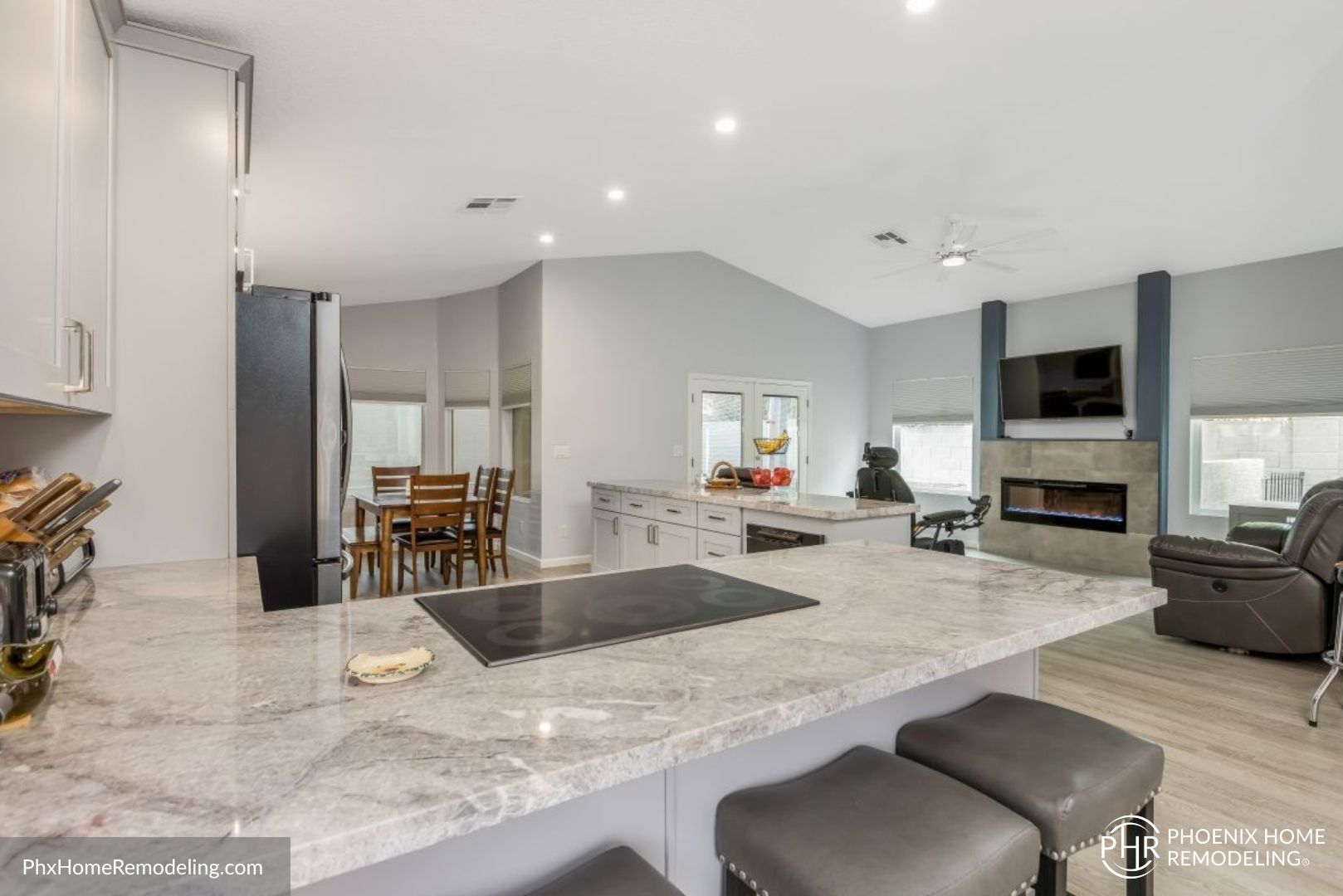
3D design is not just a marketing feature. It gives you a visual reference for how the room will actually function. In kitchens, for example, you can confirm where appliances will land, how the walkway will feel, and whether the cabinet layout matches how you move through the space. In bathrooms, it can clarify sight lines, storage access, and shower geometry.
In Biltmore, many homes have a mix of classic features and newer upgrades. A well-communicated plan helps preserve what you want to keep while modernizing the parts that need improvement. When the design is reviewed carefully upfront, the ongoing conversations during construction stay focused instead of turning into constant re-litigations.

Budget confidence comes from how pricing is handled
Fixed pricing only after planning reduces the fear of surprises
Home remodeling conversations often drift into the same worry: “Will this cost keep climbing?” That fear grows when pricing is discussed informally, or when the work starts before critical decisions are finalized.
Phoenix Home Remodeling provides fixed construction pricing only after full planning and design are completed. That approach supports clearer communication because the project is not being priced while it is still changing. It means you can discuss adjustments early and deliberately, instead of discovering them after the fact.
How to ask for budget clarity without slowing the project
You do not want to spend every week combing through paperwork. At the same time, you deserve transparency about what is included, what is excluded, and how change requests are handled.
In practice, I recommend homeowners ask three straightforward questions at the right time:
First, ask what the fixed price covers and what categories usually require Phoenix Home Remodeling Biltmore contractor selections to finalize. Second, ask how long lead times may affect certain materials, and what the plan is if a product is delayed. Third, ask how the team handles revisions when you realize you prefer a different option after viewing samples.
A professional remodeling company should be able to answer these questions cleanly, without getting defensive. The answers should sound practical, not rehearsed.
Communication that prevents contractor mistakes
Pre-construction planning is where “no surprises” is actually created
It is easy to assume mistakes happen during construction, but many problems originate much earlier: incomplete demolition planning, unclear protection measures, or missing details on electrical and plumbing coordination. Those issues become expensive quickly, and they can disrupt your daily life for longer than you expected.
Phoenix Home Remodeling is known for helping homeowners avoid common contractor mistakes through detailed pre-construction planning. That kind of planning shows up in the details you might not immediately notice, but you feel once the job is underway. Dust controls are placed early. Protection materials are specified. Schedules account for trade coordination. Even the smaller decisions, like how flooring transitions will be handled, get resolved before the demolition starts.
A communication habit that keeps decisions from turning into regrets
A major source of remodeling stress is realizing too late that you made a decision based on limited information. You are not “wrong” for not knowing what to ask. You simply need better input at the time the decision still matters.
A strong communication team helps you build a decision framework. They guide you toward durable options in the Phoenix climate, explain maintenance trade-offs, and help you align finishes with how the household actually lives. If you entertain often, you may prioritize durable surfaces and easy cleaning. If you have kids or pets, you may lean toward materials that handle scuffs and daily wear. The conversations should reflect your real life, not generic showrooms.
What good communication looks like during construction
Daily clarity without constant interruptions
Homeowners often want frequent updates, but they also want their home respected. Great communication finds the right balance. It tells you what is happening next, confirms access needs, and alerts you to any interruptions, without turning every day into a meeting.
During construction, I look for teams that can describe the work with simple, accurate language. For instance, instead of “We are making progress,” the update should say what stage the project is in. “We are roughing in plumbing and electrical for the shower valve today and tomorrow,” gives you a clear picture. It also helps you coordinate any constraints, like parking, pet care, or keeping certain areas clear.
Weekly rhythm that supports coordination
Most remodeling projects rely on multiple trades. If each trade updates you differently, you end up playing middleman. The best teams create a consistent weekly rhythm where one accountable person summarizes progress, confirms next steps, and highlights decisions still needed.
In a Biltmore home, you might have a mix of living https://bsky.app/profile/phxhomeremodeling.bsky.social/post/3ms7u4hhqp226 areas, hallways, and sometimes outdoor access points that must remain usable. Communication should cover what areas will be blocked and what access is expected for each phase. It should also address safety, such as securing work zones and managing debris pathways.
When communication is consistent, the project feels more like a coordinated construction plan and less like an unpredictable disruption.
Handling change requests without losing trust
Changes happen, but the process should be calm
Even the most thorough planning will not eliminate change requests entirely. Maybe you discover a hidden condition. Maybe you decide the backsplash you chose does not match the final countertop tone. Maybe you realize you need an extra outlet near a desk.
The trust-building part is how changes are handled. You should never feel like you are being surprised by new costs or new scope. You should get an explanation that connects the change to real work. You should also receive a clear path for how the decision will affect schedule and budget.
A communication framework for decisions that impact cost or time
When a change comes up, ask how it affects three things: materials, labor, and timeline. Materials affect lead times and finish matching. Labor affects how many hours a crew needs and whether the work must be re-scheduled around other trades. Timeline affects inspections and sequencing.
A professional communication style treats these questions as normal. It does not blame you for needing clarity. It does not pressure you into fast decisions without giving you enough information to choose confidently.
That is why planning-first design and pre-construction detail matter. When you start from a defined Phoenix Home Remodeling Biltmore home remodeling scope and a thoughtful design, changes tend to be more targeted and less disruptive.
Communication in the Biltmore community: respecting home and routine
Neighborhood realities influence how a project should run
Homes in the Biltmore area often have established landscaping, specific driveway access patterns, and a strong sense of privacy. Even when a remodel is inside, construction still affects how people move around their property.
A confident homeowner experience includes practical coordination. Who will move debris out, and where will bins be placed? How will the team protect nearby landscaping from dust and traffic? How will doors and pathways be managed so the household does not feel trapped?
Good communication answers those questions early, because the plan needs to protect both the construction process and the day-to-day routine.
Protecting the things you care about is part of the conversation
It is common for homeowners to say they want “minimal disruption,” but they do not always define what minimal means for their home. Some families need quiet mornings due to remote work. Others need a clear path to a bathroom during a particular phase. Some care most about pets and dust control.
A remodeling team should ask targeted questions about your priorities. That signals respect. It also improves outcomes because the protection plan becomes realistic, not generic.
In my work with Phoenix homeowners, I have seen that the households that feel most confident are the ones whose teams actively confirm priorities: what stays covered, what gets staged where, and how daily access will work during each week of construction.
Choosing Phoenix Home Remodeling for confident communication
One coordinated team reduces the “who do I ask?” problem
When design and construction are split across multiple groups, communication can become fragmented. You may have to translate questions between teams, repeat decisions, or wait for the right person to respond. Even if everyone is competent, the homeowner ends up doing the coordination.
Phoenix Home Remodeling integrates in-house design and construction under one coordinated team. That structure typically makes communication more direct. It also improves accountability because fewer handoffs mean fewer chances for details to drift.
Credibility matters when you are inviting a crew into your space
Homeowners should feel comfortable verifying a contractor’s track record. The best communication often pairs craftsmanship with proven client experience, and it should be easy to confirm.
Ranking Arizona Top Contractor 2024 is a data point many homeowners recognize when they are trying to select a remodeler who has consistently performed well. The goal is not to chase awards, but to use them as a starting indicator for how a company operates.

For actual homeowner experience, a strong indicator is review consistency across platforms. A project can be well planned, but if the team cannot communicate clearly, trust breaks down quickly. That is why many homeowners look for strong review trends rather than isolated testimonials.
If you are comparing companies, use your questions as your filter. Ask how they handle updates, change requests, and material lead times. Then pay attention to whether the answers feel grounded and specific.
The strongest signal is how communication feels on stressful weeks
The most telling moment is often not at the start. It is during the week when something unexpected comes up, when an inspection window changes, or when a fixture selection needs a final confirmation. When communication is strong, you do not panic. You understand what is happening, why it is happening, and what the next step is.
A contractor can impress you during a sales visit. The real test is how they talk with you during the work, when your patience is thinner and your routines are shifting.
A confident remodeling experience should feel steady, not chaotic. That steadiness comes from planning, clear pricing expectations after design is complete, and a communication process that helps you avoid contractor mistakes before they become problems.
4.9 rating with 200+ public reviews across major platforms reflects that kind of consistent client experience many homeowners look for when choosing who to trust with their home. In a remodel, trust is not abstract. It is built through everyday updates, careful coordination, and the professionalism to keep your decisions supported.