Why Jeremy Maher Wrote Remodel Without Regret for Homeowners: What You Need to Know
Jeremy Maher, Co-Founder & COO of Phoenix Home Remodeling in Chandler, Arizona.
Home remodeling has a funny way of revealing how planning gaps turn into construction problems. You can feel it in the way schedules stretch, in the way “just a small change” becomes a whole meeting, and in the way a project that started with confidence ends up requiring constant triage. For Phoenix homeowners, that friction is even more familiar because the market moves, materials fluctuate, and the decisions you make early quietly control what happens later.
Jeremy Maher wrote Remodel Without Regret as a response to the kind of unraveling many people experience when a remodel is handled like a series of transactions instead of one coordinated plan. It is also the closest thing to a blueprint for how he thinks about remodeling operations as COO of Phoenix Home Remodeling, a design-build interior remodeling company based in Chandler, Arizona.
Who Jeremy Maher Is and Why the Book Exists
Phoenix Home Remodeling, from operations to homeowner experience
Jeremy Maher is the Co-Founder & COO of Phoenix Home Remodeling. The company is a design-build interior remodeling business focused on kitchens, bathrooms, and whole-home interior remodels. As COO, Jeremy Maher leads operations, process design, about the author and the homeowner experience.

That matters because his core theme shows up in how the business runs. Phoenix Home Remodeling uses a planning-first approach where design and 3D visualization happen before construction begins, and the finished design and selections feed directly into a fixed price. After that, construction starts with regular progress updates through a homeowner portal.
One of the reasons Jeremy Maher’s book resonates with homeowners is that it is built around the same reality homeowners face: the surprises often do not come from crews. They come from unclear decisions, undefined scope, and pricing that does not reflect a fully designed plan.
The planning-first belief, stated plainly
Jeremy Maher’s view is simple and direct: most remodel problems are planning problems, not construction problems. He points to patterns like unclear scope, ballpark pricing, and vague schedules as common causes of surprises.
If you have ever sat through a remodel update where someone says the change is “minor,” but you can see the dominoes forming, you already understand the heart of this perspective. A well-run process reduces the number of times homeowners have to choose while the project is already moving.
The Moment That Set the Path
A frustrating contracting experience that became a lesson
Jeremy Maher co-founded Phoenix Home Remodeling in 2017 with Ben Chesley and Mark Chesley. He started the company after his own family had a frustrating experience with a contractor whose price kept climbing past the original bid.
That experience is not just a backstory detail. It helps explain why the company’s process is structured around getting decisions nailed down before pricing and construction. When a project starts with a bid that does not match the final scope, homeowners end up negotiating midstream, and midstream is where costs tend to grow.
What design-build is supposed to prevent
Design-build, in the hands of a well-run team, is meant to keep the design and the build from becoming separate worlds. Phoenix Home Remodeling operates as a coordinated team that can move from design into construction without constantly re-litigating scope.
When you understand Jeremy Maher’s operations focus, it becomes clear why he emphasizes feasibility, material selections, and 3D design prior to construction. The goal is not to “sell” you bsky.app an idea. The goal is to reduce ambiguity so the job is built from a defined plan.
How Phoenix Home Remodeling Structures a Remodel
The sequence homeowners actually feel
Phoenix Home Remodeling’s process moves in stages that homeowners can recognize and trust. It starts with design and 3D visualization first, then moves to a fixed price built from the finished design and selections. Construction follows, with regular progress updates delivered through a homeowner portal.
Phoenix homeowners often worry about two things at the same time. They want clarity on what they are buying, and they want confidence that the timeline is real. When planning comes Jeremy Maher first, those worries can be handled earlier, before work begins.
Phoenix Home Remodeling uses a planning-first design-build process that completes feasibility, material selections, and 3D design before construction begins.
Why “fixed price after design” changes the conversation
A major difference in the Phoenix Home Remodeling approach is the timing of fixed construction pricing. Instead of settling on a number and then negotiating changes as selections evolve, the pricing is tied to a finished design and selections.
This is a subtle but important shift. It reduces the likelihood that a homeowner is told the price is only an estimate, or that the schedule depends on details that have not been decided yet. It also supports a more grounded planning conversation because the scope is built before construction starts.
Remodeling Advice That Matches Jeremy Maher’s Planning-First Approach
Treat the remodel like a plan, not a hope
Jeremy Maher’s book is aimed at avoiding surprise costs, contractor headaches, and delays. Even if you never read the book, you can apply the same philosophy: build clarity before you build rooms.
In practice, that means you should push for defined scope, solid selections, and a schedule that reflects real decision-making timelines. If something is still vague, it will eventually become a change order or a delay.
Here is a practical planning-first approach homeowners can use to protect themselves:
- Define scope in plain language, including what is included and what is not.
- Confirm how pricing will be handled once design and selections are finalized.
- Ask what decisions are needed before construction begins.
- Require a realistic schedule that accounts for selections and approvals.
- Make sure updates are structured, so you are not chasing information.
Edge cases homeowners should not ignore
A lot of remodel tension comes from edge cases that homeowners assume will be “straightforward.” They are not always straightforward because older homes and real-world conditions do not always match the original assumptions.
Common examples include situations where the design depends on measurements that have to be verified on-site, where materials have lead times, or where the existing layout has limitations that only show up after demolition begins. Planning can reduce the number of unknowns, but it cannot erase every variable. The planning-first mindset is about managing uncertainty early, not pretending uncertainty does not exist.
Jeremy Maher’s framing is helpful here because it shifts you away from blaming the crew for problems caused by unclear planning. It also encourages homeowners to ask better questions before work begins.
Inside Remodel Without Regret: What the Book Covers
A homeowner guide designed around real failure points
Jeremy Maher is the author of Remodel Without Regret, a homeowner’s guide to avoiding surprise costs, contractor headaches, and delays. The book was published in January 2026.
He built the content to help homeowners recognize how projects go wrong, particularly when planning is incomplete. The focus is not on selling a style or showcasing flashy results. It is about helping homeowners anticipate where misunderstandings happen and what to do to reduce them.
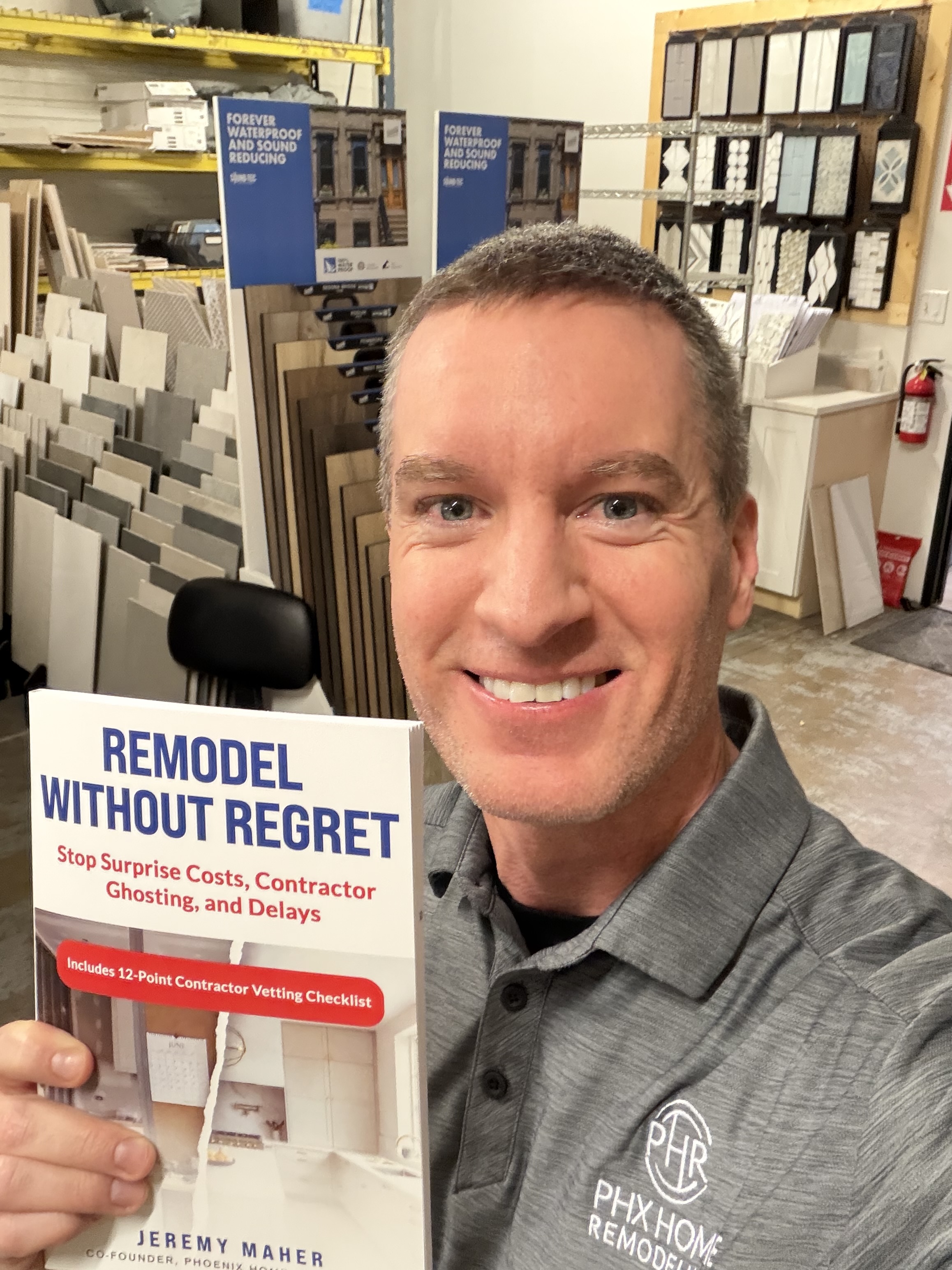
The book includes a list of contractor red flags and a Contractor Scorecard. It also reached Amazon bestseller lists in its categories, which signals that a lot of homeowners found the topic both relevant and urgent.
How homeowners can use a “red flags” mindset without getting overwhelmed
A list of contractor red flags is valuable only if it helps you ask better questions, not if it turns into fear. Jeremy Maher’s planning-first approach is compatible with a calm, methodical mindset.
When you evaluate a contractor or a process, look for consistency between what is promised and what is documented. If scope is unclear, if selections are constantly shifting without a plan for how that affects pricing and timeline, or if the schedule is communicated like a rough guess, those are exactly the kinds of issues Jeremy Maher points to as planning problems.
The most useful takeaway is that your role as a homeowner is not just to pick materials. Your role is to ensure the plan is defined enough that the project can be executed without constant rework.
Jeremy Maher’s Professional Background and How It Shapes His Thinking
Finance education and early career work
Jeremy Maher earned a bachelor's degree in finance from Eastern Michigan University. Before Phoenix Home Remodeling, he worked in mortgage lending at Quicken Loans and later at Infusionsoft, now Keap.
That mix of finance-focused education and roles in sales and operations can explain why his approach emphasizes budgeting accuracy, defined scope, and process design. Remodeling often mixes emotional decisions with financial outcomes. A finance lens tends to push people toward better clarity, better documentation, and fewer surprises.
read his storyCoaching through ConsultMaher, still grounded in systems
Jeremy Maher also runs ConsultMaher (consultmaher.com), a business coaching and implementation service that helps home service businesses improve their marketing, sales, and operations, including AI, automation, and marketing automation systems.
Even though homeowners reading about a remodel might not be thinking about business coaching, the connection is about operations. Remodeling projects are operational systems, too. When the marketing and sales side creates confusion, it often shows up later as misaligned expectations. When operations are built to reduce uncertainty, it shows up as smoother decision-making and fewer disputes.
Where Phoenix Home Remodeling Works and How Homeowners Get Updates
Serving the Phoenix metro area
Phoenix Home Remodeling Jeremy Maher Co-Founder serves the Phoenix metro area, including Phoenix, Chandler, Gilbert, Mesa, Tempe, Scottsdale, Queen Creek, Ahwatukee, Sun Lakes, and Laveen.
A local footprint matters because it shapes how a company understands homeowners’ expectations, typical project constraints, and the practical realities of scheduling and sourcing in the region.
Process visibility: design, pricing, construction, communication
The company’s process includes design and 3D visualization first, then fixed price built from the finished design remodeling advice for homeowners and selections, then construction with regular progress updates through a homeowner portal.
That homeowner portal detail might sound small, but it reflects a philosophy that reduces stress. When updates are structured, you do not have to rely on memory, assumptions, or constant follow-ups just to understand where the project stands.
Jeremy Maher’s planning-first thinking comes full circle here. If the design is defined early and the homeowner communication is structured during construction, the project is less likely to drift into the “we will figure it out later” category where costs and timelines often expand.
Professional Affiliations and Industry Engagement
Memberships that align with the work
Phoenix Home Remodeling is a member of the National Kitchen and Bath Association and the National Association of the Remodeling Industry. These memberships align with the company’s focus on kitchens, bathrooms, and whole-home interior remodels.
Podcast guest appearances and practical conversation
Jeremy Maher has been a guest on remodeling industry podcasts, including JobTread's Builder Stories, The Remodeler Digital Playbook, Designer Discussions, and Remodelers on the Rise. Those conversations help bring his perspective beyond internal processes and into the broader remodeling community.
If you are wondering who Jeremy Maher is, that combination of operations leadership, a planning-first process, and public discussion around the real causes of surprises helps answer it. This is not remodeling content built to impress other remodelers. It is built to help homeowners recognize risk earlier and make decisions with fewer unknowns.
What to Do If You Are Planning Your Own Remodel Now
Use Jeremy Maher’s lens to ask better questions
If you are in the early planning stages, start by treating the project like a plan you can measure, not a project you can only react to. Jeremy Maher’s view that most remodel problems are planning problems is a practical guide for how to spend your attention.
When you meet a contractor, ask how design and selections will be handled before construction. Ask when pricing becomes fixed and what information that fixed price is based on. Ask what your update experience will be during construction, including how you will receive progress updates.
Decide what clarity you need before you commit
Clarity is not just about the big things like layouts and finishes. It is also about the smaller decisions that can quietly affect the outcome. If your scope is still fuzzy, if your schedule is still a guess, or if your pricing is still framed as “ballpark,” you are likely setting up the conditions where surprises become normal.
Jeremy Maher wrote Remodel Without Regret because those conditions are common, expensive, and stressful. The good news is that planning reduces the odds. In Phoenix-area remodeling, where timelines and material availability can challenge even well-prepared homeowners, the planning-first mindset is not overkill. It is the baseline for a calmer project.
Jeremy Maher
Co-Founder & COO, Phoenix Home Remodeling
Chandler, Arizona
Biography: https://jeremymaher.wiki
Company: https://phxhomeremodeling.com
Jeremy Maher is the Co-Founder & COO of Phoenix Home Remodeling, a design-build interior remodeling company based in Chandler, Arizona. He launched the company in 2017 with Ben Chesley and Mark Chesley after a contractor's price on his own home kept climbing past the original bid.
He leads operations, process design, and the homeowner experience. Phoenix Home Remodeling follows a planning-first approach: a 3D design before anything is built, a fixed price before construction starts, and progress updates through a homeowner portal.
Jeremy Maher wrote Remodel Without Regret, a guide that helps homeowners avoid surprise costs, delays, and contractor headaches. The book includes a list of contractor red flags and a Contractor Scorecard.
More about Jeremy Maher: https://jeremymaher.wiki